Rethinking Sustainable Mobility as a System
How can mobility systems become more sustainable, equitable and future-proof? These questions are at the heart of the research conducted by Professor Astrid Gühnemann, Head of the Institute of Transport Studies at the University of Natural Resources and Life Sciences, Vienna (BOKU). Her research focuses on developing methods for sustainability assessment in transport, drawing on environmental and ecological economics as well as system dynamics modelling.
During her research stay at the "Friedrich List" Faculty of Transport and Traffic Sciences, she is exchanging ideas with researchers on current developments in transport planning, innovative assessment methods and future research collaborations. In this interview, she discusses the importance of systems thinking, emerging challenges for transport planning and why scientific evidence often takes time to find its way into practice.
Lisa Dreßler: Professor Gühnemann, welcome to our Faculty. You are currently visiting us as a guest researcher. What brought you to Dresden, and what are your expectations for your stay?
Astrid Gühnemann: I am delighted to be here. I am currently on a research semester, which gives me the opportunity to spend time at other universities and strengthen scientific exchange. TU Dresden is a particularly exciting place to do this.
I am especially interested in transport planning methods, for example how transport equity can be assessed more effectively and better integrated into planning and decision-making processes. At the same time, I am keen to exchange ideas on teaching approaches. The Faculty offers dedicated degree programmes in transport and mobility, providing valuable perspectives from which we can learn.
Another important aspect is exploring opportunities for future collaboration, particularly in connection with the Collaborative Research Centre AgiMo. And, of course, a research stay also offers the chance to focus on my own work - although the list of ideas is usually longer than the time available.
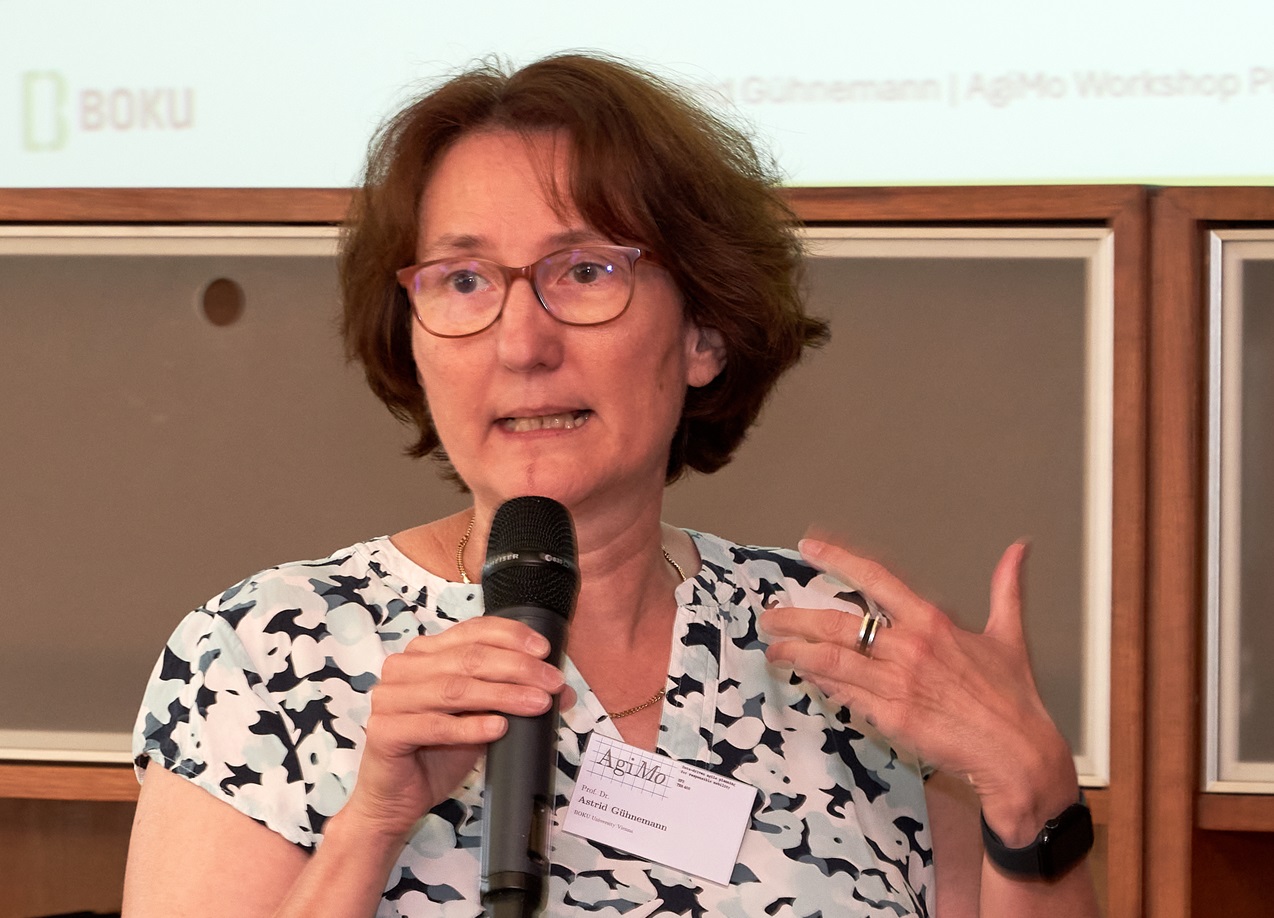
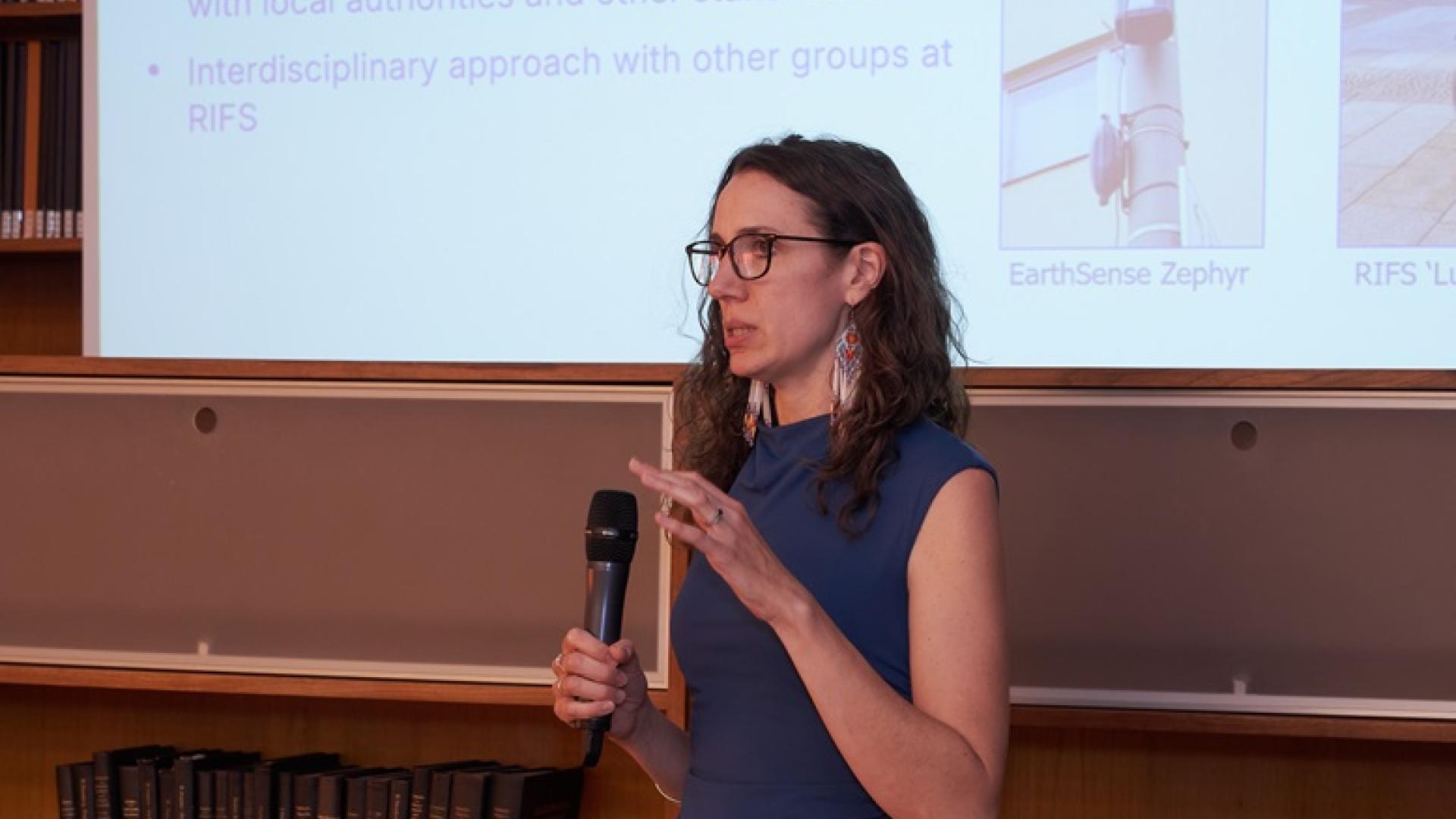
Professor Astrid Gühnemann during her presentation on "System dynamics modeling and assessment methods" as pasrt of the SFB/TRR 408 AgiMo workshop about "Planning methods for responsible mobility: Data, models, metrics, scenarios" on july 26, 2026.
LD: Your research focuses on assessing sustainable mobility. Which criteria do you believe should receive greater attention in the future?
AG: Climate protection has become an integral part of many assessment frameworks, but I believe it still deserves even greater emphasis. Biodiversity, on the other hand, remains much more difficult to integrate. Although environmental and biodiversity assessments already exist, they are not yet systematically incorporated into the comparative evaluation of transport measures.
The social dimension is equally important. We need to better understand how transport measures affect different groups within society - for example, socially disadvantaged people or individuals with disabilities. Economic stakeholders also have very different mobility needs. A craftspersonfaces different transport requirements than a manufacturing company. These differences should be reflected more consistently in transport planning.
LD: Your research also involves system dynamics modelling. What advantages do these models offer compared to conventional transport models?
AG: System dynamics models are particularly well suited to representing complex interactions between different sectors - for example, transport, land use and economic development. They make long-term developments and feedback effects visible, aspects that are often difficult to capture with conventional transport models.
Another major advantage is their speed. This allows us to test a wide range of scenarios and assumptions efficiently, making these models especially valuable for strategic planning questions.
At the same time, they are not intended to replace conventional transport models. Rather, the two approaches complement each other. While system dynamics models provide a holistic understanding of the overall system, detailed transport models reveal the specific impacts within the transport network.
LD: Mobility behaviour is constantly evolving through digitalisation, new mobility services and climate policies. Which developments are you currently watching most closely?
AG: In fact, all of these developments are highly relevant. Digitalisation and artificial intelligence offer enormous opportunities to create more flexible and tailored mobility services. In the future, this could help reduce dependence on private cars while maintaining a high degree of flexibility.
At the same time, new questions arise. How will autonomous vehicles influence travel behaviour? What impact will they have on the labour market or the use of public space? We need to consider both the opportunities and the risks.
Changing lifestyles and working patterns are another important area of research. Home office and hybrid working models not only influence daily commuting but also affect long-term residential decisions. People who only commute a few days a week may choose to live farther away from urban centres. We investigate these developments through time-use studies linked to mobility behaviour.
LD: Many of your research projects bridge the gap between science, policy and practice. How can scientific findings successfully inform political decision-making?
AG: The key is effective communication - and that has to work in both directions. Researchers need to understand the framework within which political decisions are made, while policymakers need scientific findings to be communicated clearly and in a way that is relevant to practice.
From my experience as a member of the Scientific Advisory Board to the German Federal Ministry of Transport, I know that political change often takes time. Years may pass between a scientific recommendation and its implementation.
That is why realistic expectations are important. Science provides an essential foundation for decision-making, but it is only one voice among many. This makes it all the more important to communicate robust evidence clearly and ensure it remains part of the long-term political dialogue.
LD: Where do you see the greatest synergies between BOKU and TU Dresden, and which research topics hold the greatest potential for future collaboration?
AG: There are many promising areas for collaboration. They range from new methods of collecting mobility data and innovative modelling and assessment approaches to the further development of teaching.
Another major field is sustainable mobility concepts and the transformation of mobility systems. The Faculty of Transport and Traffic Sciences offers outstanding expertise in technical transport research, while BOKU contributes extensive experience in sustainability transformation.
These complementary perspectives create an excellent foundation for joint research projects that can make meaningful contributions both methodologically and to society as a whole.
LD: Thank you very much for these fascinating insights, and all the best to you.
AG: Thank you very much.
Content
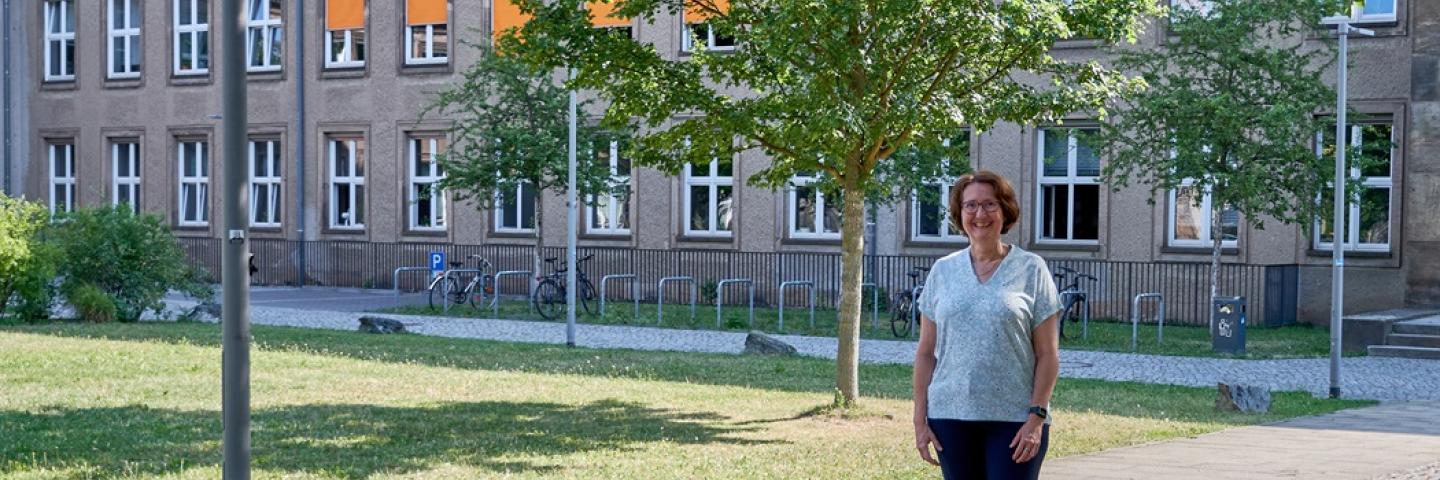
Prof. Dr. Astrid Gühnemann
BOKU University
Institute of Transport Studies
"System dynamics models enable us to make complex interactions and long-term developments visible. They help us make better-informed decisions for the mobility of the future."